Emotionsand bodiesin fact-basedmedia production

ERC research project · 2026–2031

Emotions and bodies in fact-based media production: Integrating affective and embodied knowledge into journalism and documentary filmmaking

AFfacts is a five-year research project based at the University of Amsterdam. The AFfacts team investigates, theorizes, and tests the role of bodies and emotions in journalism and documentary work.

In journalism and documentary work, emotions and the body have long been seen as sources of bias or trauma, or as markers of sensationalism. This perspective obscures the productive role of emotions and embodied experience. In AFfacts, we look into the epistemic value of emotions and bodies—how they limit and enable what media professionals know.

We aim to empirically, theoretically, and practically integrate emotions and bodies into fact-based media epistemologies. Our project aims to help journalists and documentary makers move from a dichotomic to a more holistic view of their profession and restore their connection with audiences. We also develop new approaches to supporting mental health in the news industry.

Project

ERC · 2026–2031

Title

Emotions and bodies in fact-based media production: Integrating affective and embodied knowledge into journalism and documentary filmmaking (AFfacts)

Host institution

University of Amsterdam

Funded by

European Research Council (ERC)

Grant agreement ID

101220216

Received funding

1 500 000 EUR

Period

2026/2/1 – 2031/1/31

1

Now

Fieldwork

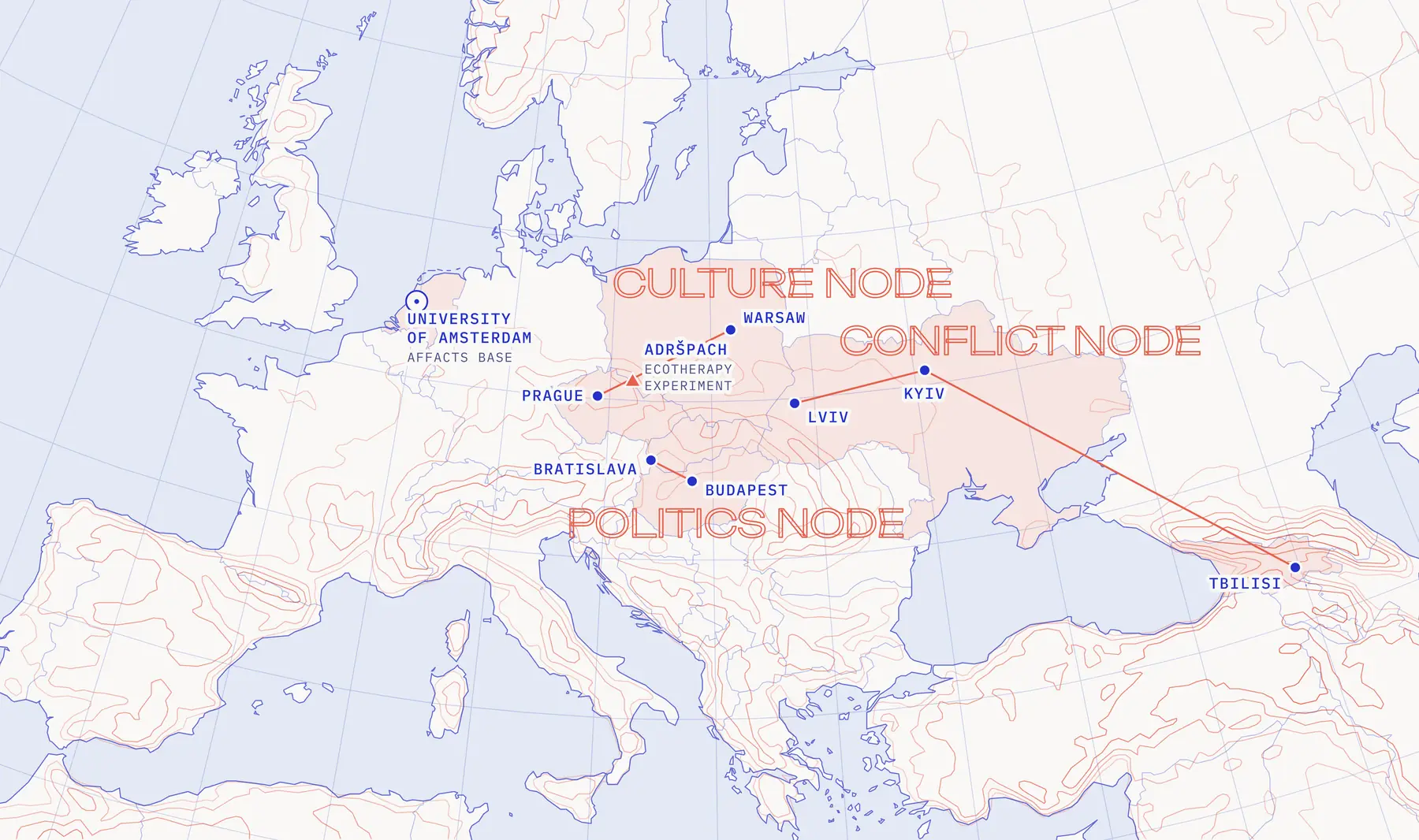
Right now, the AFfacts team is busy conducting ethnographic research among media professionals working in three production nodes: journalism and documentary making about politics, conflicts, and culture. The focus on political journalism, war reporting, and cultural journalism reflects the diversity of these beats’ emotional styles: the traditionally un-emotional, disembodied coverage of politics; the ubiquity of emotions, trauma, and physical risks in conflict reporting; and the ’emotional exceptionalism’ and relative subjectivity of cultural and artistic journalism. Together, these beats show the diversity of the epistemic value of emotions.

We conduct observations, interviews, shadowing, and online research in Poland, Czechia, Slovakia, Hungary, Ukraine, and Georgia. The region is politically diverse, with varying levels of media freedom and a rich media history. Such diversity provides fertile ground for exploring different media production ecosystems, organizational cultures, epistemologies, and emotional styles. Yet, we address issues relevant beyond the region—analyzing trust, empathy, and affective proximity as sources of information and nuance in reporting, and discussing trauma and stress caused by violence, political pressure, and democratic backsliding as incentives for innovation.

2

Second stage

Theory

In the second stage, the AFfacts core team will work with the project’s Advisory Board to theorise the ethnographic findings and integrate emotions and embodied experiences into fact-based media knowledge production.

3

Finally

Nature retreats

Finally, we will collaborate with mental health experts and practitioners to experiment with a series of nature retreats for journalists and documentary makers. We aim to test whether and how nature-based therapy—a promising approach in mental health care—can enhance journalists’ and documentary makers’ emotional literacy and mental well-being.

Three nodes

Politics · Conflict · Culture

Politics

Bratislava – Budapest

We study political and investigative reporting, which are traditionally understood as relatively unemotional and disembodied practices.

Conflict

Lviv – Kyiv – Tbilisi

We study conflict and war reporting and documentation, where emotions, exposure to potentially traumatic events, and physical risks are ubiquitous and often unavoidable.

Culture

Prague – Warsaw

We study cultural and artistic journalism, which allows—or even requires—media professionals to draw on their emotions and subjectivity.

Fieldwork in Poland, Czechia, Slovakia, Hungary, Ukraine, Georgia. Ecotherapy experiment in Adršpach.

Team

5 researchers

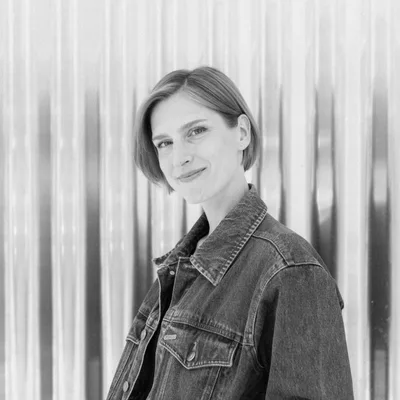
Johana Kotišová, image credit: Markéta Šindlerová

Principal Investigator

Johana
Kotišová

Dr. Johana Kotišová is an Assistant Professor in Documentary and Journalism in the Media Studies department at the University of Amsterdam. She has a background in journalism, social anthropology, and sociology. Her research interests include conflict reporting, investigative and cultural journalism, and media professionals’ emotional labour and mental well-being. In addition to her academic work, Johana is trained in nature-based therapy. She coordinates and supervises all parts of AFfacts, while her own fieldwork currently focuses on media professionals documenting the Russo-Ukrainian War.

Relevant publications 31

Kotišová J et al. (2026) “Emotions in Metajournalistic Discourse: Discussing the Emotional Dimensions of Journalism in Belarus, Germany, India, Ukraine, and the United States.” International Journal of Communication. DOI: 10.65476/1fnf3578

Kotišová J and Orlova D (2026) “OSINV vs. Core International Crimes: Practices and Professional Identities of Ukrainian Journalists, Investigators, and Researchers Investigating Atrocities.” Digital Journalism. DOI: 10.1080/21670811.2026.2742982

Kotišová J and Stupart R (2027) “War is Peace: Ethics and Context-Switching in War Reporting and Journalism Research.” In: Schultz T and Jackob N (eds) Research Handbook of Media Ethics. Edward Elgar.

Kotišová J and Wahl-Jorgensen K (2026) “Emotion, digital media, and democracy.” In: Papacharissi Z (ed) The Routledge Companion to Digital Media and Democracy. London: Routledge, pp. 33–43. DOI: 10.4324/9781003477570-4

Kotišová J (2025) “Journalism and Embodied Knowledge: Conceptualizing Affective Epistemology and Epistemic Affordances of Emotions and Affect Across News Beats.” Journalism Studies. DOI: 10.1080/1461670X.2025.2495726

Dodds T et al. (2025) “On the Institutionalization of OSINV in Journalistic Practice.” Journalism & Mass Communication Quarterly 102(3): 617–641. DOI: 10.1177/10776990251334382

Kotišová J and Stupart R (2025) “Feeling as Knowing: Emotions and Epistemology in Journalism Studies.” In: Soto-Sanfiel MT and Salojärvi V (eds) The Handbook of Journalism and Emotion. Wiley, pp. 5–16. DOI: 10.1002/9781394169429.ch1

Kotišová J (2025) “Does Ukrainian mean biased? Foreign and local journalism and embodied knowledge.” In: Dovzhyk S et al. (eds) Documenting the War: Between Ukraine and the World, pp. 51–60. Lviv: Center for Urban History and INDEX.

Kotišová J (2025) “Emotions in journalism.” In: Nai A et al. (eds) Elgar Encyclopedia of Political Communication. Edward Elgar, pp. 514–517. DOI: 10.4337/9781035301447.vol1.00128

Kotišová J (2024) “Passion as Profession? Lifestyle journalists between emotional exceptionalism and cruel optimism.” In: Hanusch F (ed) Routledge Handbook of Lifestyle Journalism. London: Routledge, pp. 186–201. DOI: 10.4324/9781003396727-16

Kotišová J (2024) “Emotions in Digital Journalism.” In: Eldridge II S et al. (eds) The Routledge Companion to Digital Journalism Studies. New York: Routledge, pp. 377–386. DOI: 10.4324/9781003334774-44

Kotišová J (2024) “The ‘Emotional Gap’? Foreign reporters, local fixers and the outsourcing of empathy.” In: Pantti M and Mortensen M (eds) Media and the War in Ukraine. New York: Peter Lang, pp. 157–174. DOI: 10.3726/b21210

Kotišová J (2024) “Don’t Be a Jerk: Guidelines for ethical and sustainable collaboration among reporters, fixers, and local producers covering warzones.” In: Bradley L and Heywood E (eds) Journalism as the Fourth Emergency Service. New York: Peter Lang, pp. 129–138. DOI: 10.3726/b21650

Rijnierse N and Kotišová J (2024) “Beyond ‘Fixing’: The Liminality of ‘Local’ Media Workers in Beirut.” Journalism Studies. DOI: 10.1080/1461670X.2024.2433221

Kotišová J (2024) “‘It’s a Jungle’: Precarity, solidarity, and ambiguity in small conflict reporting ecosystems.” Journalism. DOI: 10.1177/14648849241286847

De Jong B and Kotišová J (2024) “‘The goal is to make you weaker’: Mental well-being of European journalists in cross-border investigations.” Journalism. DOI: 10.1177/14648849241272270

Kotišová J and Van der Velden L (2023) “The Affective Epistemology of Digital Journalism: Emotions as Knowledge Among On-the-Ground and OSINT Media Practitioners Covering the Russo-Ukrainian War.” Digital Journalism. DOI: 10.1080/21670811.2023.2273531

Kotišová J (2023) “The Epistemic Injustice in Conflict Reporting: Reporters and ‘fixers’ covering Ukraine, Israel, and Palestine.” Journalism. DOI: 10.1177/14648849231171019

Kotišová J and Deuze M (2022) “Decolonizing Conflict Journalism Studies: A Critical Review of Research on Fixers.” Journalism Studies. DOI: 10.1080/1461670X.2022.2074871

Ferron B, Kotišová J and Smith S (2022) “The Primacy of Secondary Things: A Sustained Scientific Dialogue on Three Edges of the Journalistic Field.” Journalism and Media 3(1): 212–227. DOI: 10.3390/journalmedia3010016

Kotišová J (2022) “An elixir of life? Emotional labour in cultural journalism.” Journalism 23(4): 789–805. DOI: 10.1177/1464884920917289

Waschková Císařová L and Kotišová J (2022) “Crumbled Autonomy: Czech journalists leaving the Prime Minister’s newspapers.” European Journal of Communication. DOI: 10.1177/02673231221082242

Kotišová J and Waschková Císařová L (2021) “‘I Know Which Devil I Write For:’ Two Types of Autonomy Among Czech Journalists Remaining in and Leaving the Prime Minister’s Newspapers.” The International Journal of Press/Politics. DOI: 10.1177/19401612211045229

Kotišová J (2020) “When the Crisis Comes Home: Emotions, professionalism, and reporting on March 22 in Belgian journalists’ narratives.” Journalism. DOI: 10.1177/1464884917748519

Deuze M, Kotišová J, Newlands G, Van’t Hof E (2020) “Toward a Theory of Atypical Media Work and Social Hope.” Artha Journal of Social Sciences 19(3): 1–20. DOI: 10.12724/ajss.54.1

Zahrádka P and Kotišová J (2020) Když je kritikem každý: Výzkum sémantiky estetického hodnocení. Olomouc: Univerzita Palackého.

Kotišová J (2019) Crisis Reporters, Emotions, and Technology: An ethnography. Basingstoke: Palgrave Macmillan.

Kotišová J (2019) “Creative nonfiction in social science: Towards more engaging and engaged research.” Teorie vědy / Theory of Science 41(2): 283–305.

Kotišová J (2019) “Devastating Dreamjobs: Ambivalence, Emotions, and Creative Labor in a post-socialist audiovisual industry.” Iluminace 31(4): 27–45.

Kotišová J (2019) “The Elephant in the Newsroom: Current research on journalism and emotions.” Sociology Compass. DOI: 10.1111/soc4.12677

Kotišová J (2017) “Cynicism Ex Machina: The emotionality of reporting the ‘refugee crisis’ and Paris terrorist attacks in Czech Television.” European Journal of Communication 32(3): 242–256.

Maciej Grzenkowicz

Postdoctoral Researcher

Maciej
Grzenkowicz

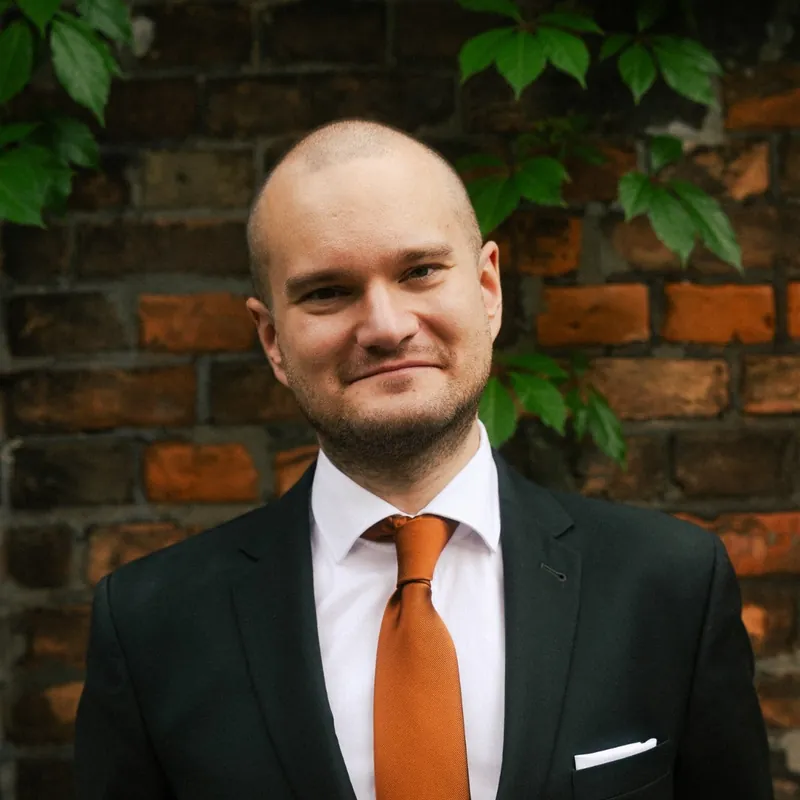
Dr. Maciej Grzenkowicz is a postdoctoral researcher at the Media Studies department of the University of Amsterdam. His main area of expertise is multimodal argumentation in the media and social media, with a particular focus on fact-checking on TikTok. Previously, he worked as a journalist in several prominent Polish media outlets, including Gazeta Wyborcza and Radio Nowy Świat. At AFfacts, he looks into the role of emotions in the reasoning of cultural journalists in Poland and Czechia.

Relevant publications 5

Grzenkowicz M (2026) TikTok, it’s time for the truth: Multimodal argumentation and fact-checking on TikTok. University of Groningen.

Grzenkowicz M (2026) “And That’s Why It’s True: Abductive Proof Without Words in Misleading Videos’ Factchecks on TikTok.” Informal Logic 46(3): 414–454.

Grzenkowicz M (2026) “Non-verbal Artifacts and Propositionality: Adjusting Speech Act Theory To Accommodate Multimodal Argumentation.” Argumentation.

Grzenkowicz M (2025) “Non-verbal artifacts and argumentation: Towards a method of reconstructing multimodally expressed propositions in argumentative artifacts.” Topoi 45(3): 901–914.

Grzenkowicz M and Wildfeuer J (2025) “Addressing TikTok’s multimodal complexity: a multi-level annotation scheme for the audio-visual design of short video content.” Digital Scholarship in the Humanities 40(4): 1143–1166.

Erwin van ’t Hof

Postdoctoral Researcher

Erwin
van ’t Hof

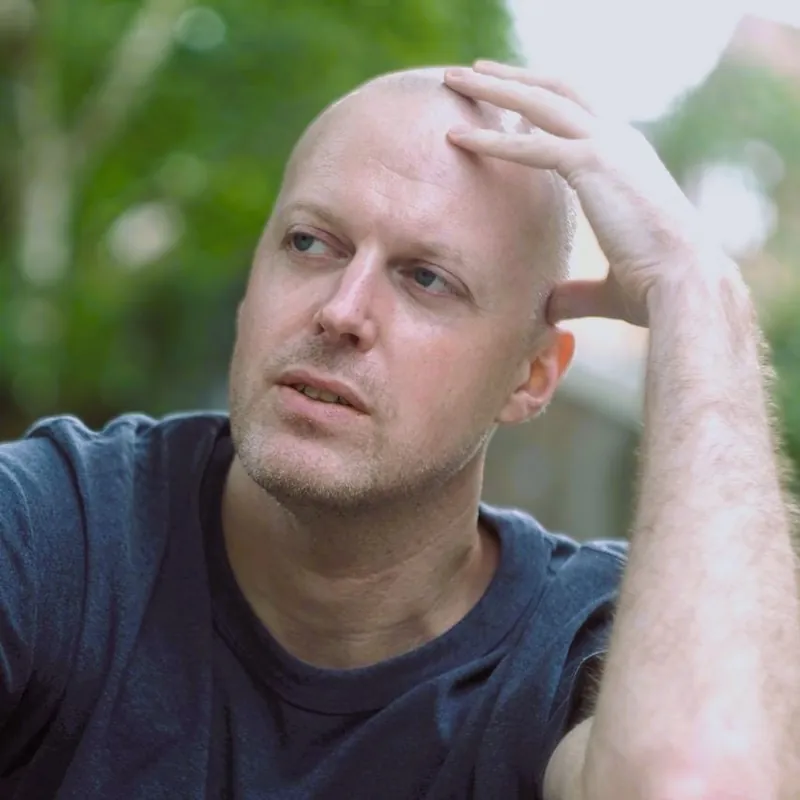
Erwin van ’t Hof is a postdoctoral researcher at the Media Studies department of the University of Amsterdam, with a background in freelance journalism. His research bridges the sociology of journalistic work and the political economy of media production, with a particular interest in emotion and mental well-being. His PhD research explored how perceptions of what newswork is (or should be) shape freelance journalists’ navigation through the world of journalism. It examined the role of foundation funding, the structural stressors journalists face on the job, and freelancers’ collective efforts to improve their working conditions. As part of the AFfacts project, he works on the politics node, exploring the epistemic value of emotions and bodies in Hungarian and Slovak political reporting.

Relevant publications 6

Van ’t Hof E and Deuze M (2027) “On the Generative Role of Emotion in Collective Organization: Freelancers’ Action in the Newsroom.” In: Banks M and Cuyler A (eds) Creative Justice in Arts and Culture: Global Perspectives. Palgrave.

Van ’t Hof E and Deuze M (2025) “Navigating the Freelance Life: How perceptions of newswork mediate work-related stressors of self-employed journalists.” Journalism 27(7): 1949–1967. DOI: 10.1177/14648849251365123

Van ’t Hof E and Deuze M (2025) “‘If We Don’t Take the Risk, Who Else Would?’ Self-perceptions of Foundations that Financially Support Journalism.” Journalism Practice 19(5): 978–996. DOI: 10.1080/17512786.2023.2238197

Van ’t Hof E and Deuze M (2021) “Making Precarity Productive.” In: Chadha K and Steiner L (eds) Newswork and Precarity. Routledge, pp. 189–202. DOI: 10.4324/9781003057376-17

Deuze M, Kotišová J, Newlands G and Van ’t Hof E (2020) “Toward a Theory of Atypical Media Work and Social Hope.” Artha Journal of Social Sciences 19(3): 1–20. DOI: 10.12724/ajss.54.1

Van ’t Hof E and Sjoerd A (2020) De Nieuwe Journalist: van traditioneel naar modern freelancen. Amsterdam University Press.

Natálie Zehnalová

PhD Candidate

Natálie
Zehnalová

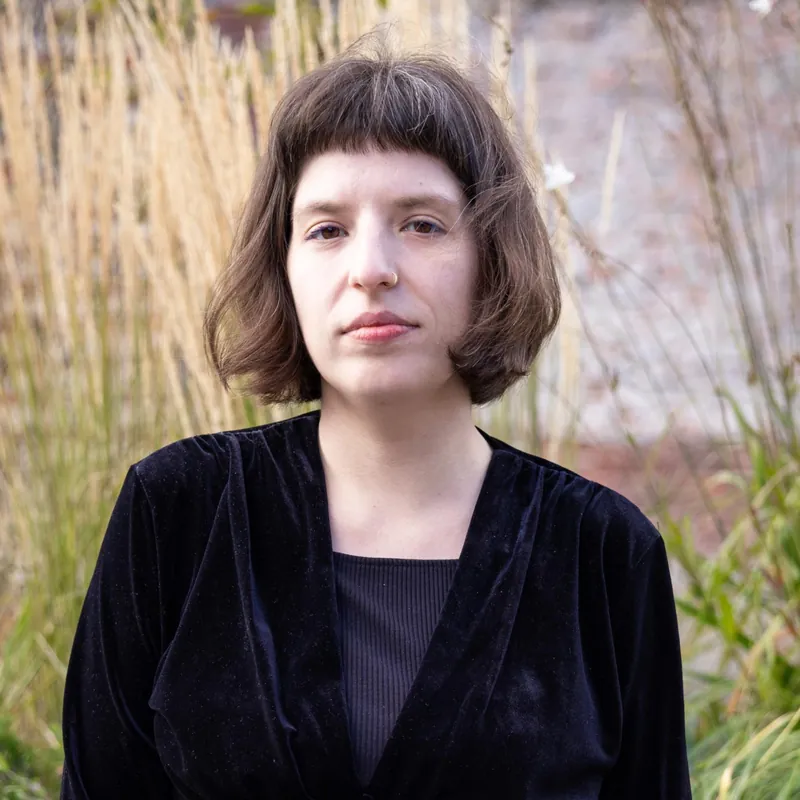
Natálie Zehnalová is a PhD candidate at the Media Studies department of the University of Amsterdam. Her broader research interests converge in the questions what function does language play in the global ecologies of violence, and what constitutes epistemically responsible knowledge production. A part of AFfacts, her dissertation project examines how embodied and existential experiences of war shape journalistic knowledge in Ukraine and Sakartvelo as related yet distinct contexts impacted by the continuation of Tsarist, Soviet, and Russian imperial violence. Natálie previously studied cultural studies and cultural semiotics in Berlin, Potsdam, and Tbilisi, and fostered cross-border collaboration as a network manager of a Berlin-based journalist network.

Research Assistant

Vitaliya
Mitali

Vitaliya Mitali is a Research Assistant on the AFfacts project and a Research Master’s student in Cultural Analysis at the University of Amsterdam. Her research interests include digital culture, affect, and cultural memory, with a particular interest in the mediation of Ukrainian cultural experience in wartime. Within AFfacts, she supports both the research and organisational development of the project. Her work includes working with interview materials, particularly those related to Ukraine, contributing to the development and content of the project website, and supporting the preparation and organisation of project events.

Research notes

Coming soon

The first research notes from the field are on their way.

Events

1 upcoming

04Dec2026 · Fri
When
4 December 2026, 10.00 – 18.00
Where
University Library, Chirurgisch TheaterAmsterdam
Organised by
Johana Kotišová, Lonneke van der Velden, Truth Hounds. Co-funded by AFfacts, Truth Hounds, Amsterdam School for Cultural Analysis, Netherlands Institute for Cultural Analysis, and Research School for Media Studies
Register here →

Network

Board · Collaborators · Partners

Advisory board6

Karin Wahl-Jorgensen

Cardiff University

Richard Stupart

University of Liverpool

Mark Deuze

University of Amsterdam

Kevin Smets

Vrije Universiteit Brussel

Nete Nørgaard Kristensen

University of Copenhagen

Carl Plantinga

Calvin University

Expert collaborators1

Lead Expert in Psychotherapy

Martin
Jára

Dr. Martin Jára studied psychology at the Faculty of Arts of Charles University and, after gaining experience in psychiatry, established himself as a psychotherapist. He found his niche in Gestalt therapy, an approach that emphasizes body-centered work in the “here and now”. He co-founded several Gestalt institutes in the Czech Republic, where he currently works as a teacher and supervisor. Furthermore, he founded and led the organization League of Open Men, where he gained practical experience in direct client work and advocacy related to men’s gender issues. In recent years, he has been exploring ways to apply psychotherapy in the natural environment. Together with Mr. and Mrs. Táborský, he has written several articles on the subject, and in 2027, Routledge will publish their monograph Ecopsychotherapy On The Rise: Theory, Methodology, and Vision. He believes that the combination of psychotherapy and nature can significantly expand the possibilities for deepening the recovery of people who have been exposed to traumatic situations.

Contact

Get in touch

Principal Investigator

Dr. Johana Kotišová

J.Kotisova@uva.nl

Research Assistant

Vitaliya Mitali

V.Mitali@uva.nl